Stablecoins did roughly $33 trillion in volume in 2025. Entire countries are adapting to transacting and storing money in them. Circle's USDC alone did around $18.3 trillion last year, wallets like MetaMask rolled out spending stablecoins by card, and Visa is pushing hard into the space.
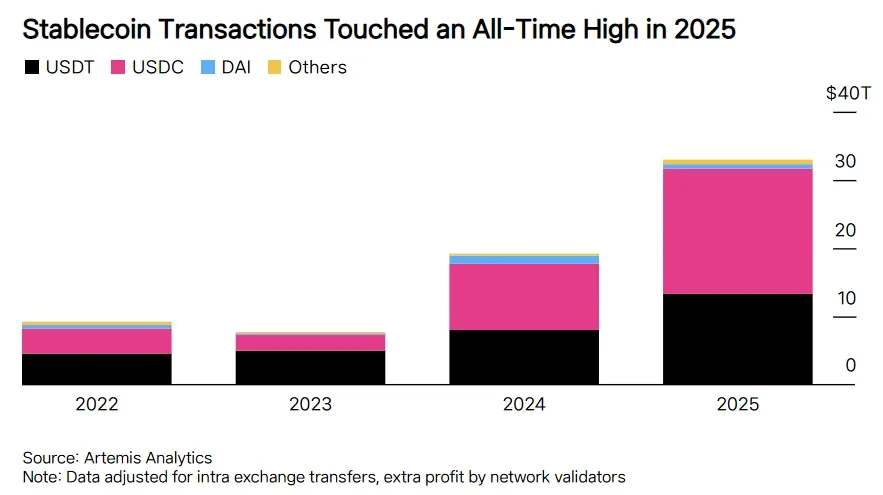
Many people still think of stablecoins as crypto dollars. They are much more than that. They are payment rails, and they are best understood as infrastructure.
Getting that framing right helps you avoid bad product decisions, lazy regulation debates, and mispriced risk.
At a Stablecoins, RWA, and Institutional Builders day in Argentina, the discussion kept returning to one theme: stablecoins will replace or blend with the traditional payment rails we already use, and banks and large institutions are quietly acting to protect their position in international payments.
If you treat stablecoins as just crypto dollars, success looks like savings, long-term holding, and minimal velocity. If you treat them as payment rails, you measure success by high velocity, deep liquidity, reliability under stress, and low friction to integrate.
Payments beat ideology every time.
Local users don't care that a stablecoin is decentralized. They care that it clears faster than a bank, doesn't get frozen mid-transfer, and works on weekends. That alone tells you the technology and the label aren't what people value. What they value is what the thing lets them do: fast payments, lower fees, money that moves.
So if you're building a stablecoin as a payment rail, the question to keep asking is whether the rail can handle stress, scale, and hostile conditions. Because people don't adopt stablecoins for what they are. They adopt them for what they let them do.